
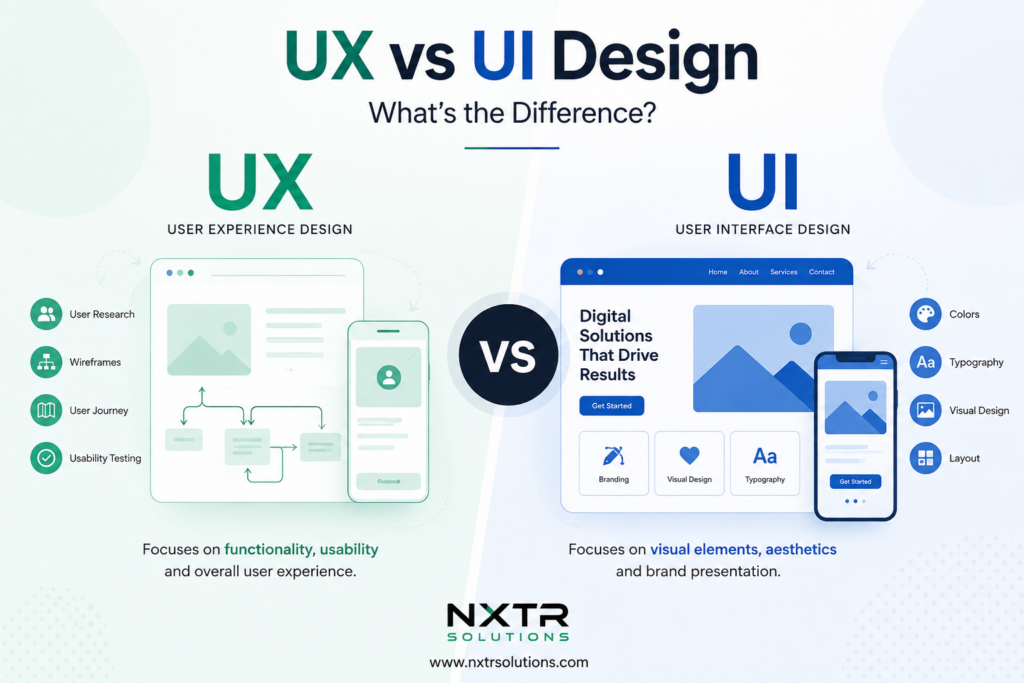
Understanding UX and UI Design for Better Digital Products
When people talk about creating a successful website or mobile app, the terms UX Design and UI Design often come up together. Although they work hand in hand, they are not the same thing. Understanding the difference between UX and UI can help businesses make better decisions when building digital products that not only look attractive but also deliver an exceptional user experience.
At NXTR Solutions, we combine strategic UX planning with modern UI design to create websites and applications that are visually appealing, intuitive, and built to drive business growth. Our design process focuses on user behavior, functionality, and conversion, ensuring every digital experience is both beautiful and effective.
What is UX Design?
User Experience (UX) Design focuses on how users interact with a digital product. The primary goal of UX is to make every interaction simple, efficient, and enjoyable.
UX designers research user needs, identify pain points, and build user journeys that make websites and applications easy to navigate.
UX Design Includes:
- User research and analysis
- Information architecture
- User journey mapping
- Wireframing
- Interactive prototypes
- Usability testing
- Accessibility improvements
- Conversion optimization
Think of UX as the blueprint behind a successful digital experience.
What is UI Design?
User Interface (UI) Design focuses on the visual appearance of a product. It transforms UX wireframes into polished interfaces that represent your brand and engage users.
UI designers work on everything users actually see and interact with.
UI Design Includes:
- Color schemes
- Typography
- Buttons and icons
- Layout design
- Images and illustrations
- Design systems
- Responsive interfaces
- Visual consistency
If UX determines how a product works, UI determines how it looks and feels.
UX vs UI Design: Key Differences
| UX Design | UI Design |
|---|---|
| Focuses on user experience | Focuses on visual appearance |
| Solves usability problems | Creates engaging interfaces |
| Based on user research | Based on branding and aesthetics |
| Creates wireframes and user flows | Designs final screens and layouts |
| Improves functionality | Improves visual appeal |
| Measures user satisfaction | Strengthens brand identity |
Why Both UX and UI Matter
Many businesses believe a beautiful website is enough. In reality, a stunning design without good usability often leads to poor engagement and lower conversions.
Likewise, a highly functional website with outdated visuals may fail to build trust.
The most successful digital products combine:
- Simple navigation
- Fast user journeys
- Attractive interfaces
- Mobile responsiveness
- Clear call-to-actions
- Consistent branding
Together, UX and UI create experiences that users enjoy and businesses benefit from.
Real-World Example
Imagine an online shopping website.
UX Designer’s Role
- Makes products easy to find
- Simplifies checkout
- Reduces unnecessary clicks
- Improves loading experience
- Ensures mobile usability
UI Designer’s Role
- Designs attractive product pages
- Creates appealing buttons
- Selects brand colors
- Uses readable typography
- Makes the website visually modern
Both roles are essential for creating an enjoyable shopping experience.
Common UX Design Mistakes
Businesses often lose customers because of poor user experience.
Common issues include:
- Confusing navigation
- Slow-loading pages
- Poor mobile optimization
- Long registration forms
- Hidden contact information
- Too many pop-ups
- Inconsistent layouts
Good UX design removes these obstacles and helps users achieve their goals quickly.
Common UI Design Mistakes
Even well-built websites can suffer from poor interface design.
Examples include:
- Too many colors
- Small fonts
- Low contrast
- Inconsistent button styles
- Cluttered layouts
- Poor spacing
- Weak visual hierarchy
A clean interface builds trust and encourages users to take action.
How UX and UI Work Together
UX and UI are not competing disciplines—they complement one another.
A typical design process looks like this:
- Research user needs
- Define user journeys
- Create wireframes
- Build prototypes
- Design visual interfaces
- Test with real users
- Refine based on feedback
- Launch and improve continuously
This collaborative approach results in products that are intuitive, visually engaging, and aligned with business goals.
Benefits of Investing in UX and UI Design
Businesses that prioritize UX and UI often experience:
- Higher customer satisfaction
- Better search engine performance
- Increased conversion rates
- Lower bounce rates
- Stronger brand credibility
- Higher customer retention
- Improved accessibility
- Better return on investment
A thoughtful design strategy doesn’t just improve aesthetics—it contributes directly to measurable business success.
Why Choose NXTR Solutions for UX & UI Design?
At NXTR Solutions, we believe exceptional digital products start with understanding people.
Our team designs websites, mobile applications, and custom software that balance creativity with functionality. Every project begins with user research and strategic planning before moving into visually engaging interface design.
Whether you’re launching a startup, redesigning an existing website, or building a complex business platform, we create experiences that are:
- User-focused
- Responsive across all devices
- Conversion-driven
- SEO-friendly
- Fast and scalable
- Built around your business goals
Our UX and UI specialists work closely with developers to ensure every design translates seamlessly into a high-performing digital product.
Final Thoughts
UX and UI design are two sides of the same coin. UX ensures your users can achieve their goals with ease, while UI makes every interaction visually engaging and memorable.
Businesses that invest in both create stronger brands, happier customers, and better long-term results.
If you’re planning your next website, mobile app, or software platform, focusing on UX and UI from the very beginning can make all the difference.
At NXTR Solutions, we’re passionate about designing digital experiences that help businesses grow through innovation, usability, and exceptional design.
Frequently Asked Questions (FAQs)
1. What is the main difference between UX and UI design?
UX focuses on the user’s overall experience and functionality, while UI focuses on the visual design and interactive elements.
2. Which is more important, UX or UI?
Both are equally important. Great digital products require both excellent usability and attractive visual design.
3. Can one person handle both UX and UI design?
Yes. Many designers specialize in both, especially on smaller projects, although larger teams often separate the roles.
4. Does good UX improve SEO?
Yes. Better navigation, faster loading, mobile responsiveness, and improved engagement can positively influence search performance.
5. Why should businesses invest in UX/UI design?
Effective UX/UI design improves customer satisfaction, increases conversions, strengthens brand trust, and supports long-term business growth.